The 2nd China Commercial Aerospace Industry Development Conference and Commercial Aerospace Exhibition will be held in March at the Shenzhen International Convention and Exhibition Center.

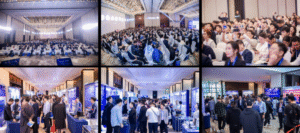
To promote academic exchange, technological collaboration, and industrial innovation in the commercial aerospace sector and to advance aerospace science and technology, the 2nd China Commercial Aerospace Industry Development Conference and Exhibition is scheduled to take place from March 19 to 20, 2026, at the Shenzhen World Exhibition & Convention Center.
Under the theme “Innovation Leaps, Space Dreams,” this year’s event will bring together top experts, scholars, leading enterprises, and industry regulators in the field of commercial aerospace. The conference will delve into hot topics such as cutting-edge aerospace technologies, low-orbit satellites, commercial space launches, digital space, low-cost satellite manufacturing, satellite applications, and operational services. It aims to explore pathways for industrial development, build a collaborative ecosystem, and provide participants with a high-level platform for academic exchange and industrial cooperation. The event is also set to achieve new breakthroughs in scale and redefine industry standards across multiple dimensions.
Exhibition Scale: Participating companies: 200+ | Exhibition area: 10,000 square meters | Number of visitors: 10,000+ | Business meetings: 150+ | Concurrent conferences: 1+6 | Keynote speakers: 150+ | Media coverage: 100+
In recent years, driven by policy support, technological innovation, rapid industrial development, and the influx of capital-intensive investments, China’s commercial aerospace sector has encountered unprecedented opportunities for growth. It is estimated that by 2025, the scale of China’s commercial aerospace industry will exceed 2.5 trillion yuan, making commercial aerospace a new driving force for economic growth.
With continuous technological breakthroughs and growing market demand, the world is at the early stages of a period of intensive satellite launches. It is predicted that nearly 60,000 satellites will be deployed into low Earth orbit over the next decade, marking a new frontier in global space competition.
In order to promote exchanges and cooperation among commercial aerospace companies, explore industry trends and technological advancements, and foster the coordinated development of the entire industry chain, the 2nd Commercial Aerospace Industry Development Conference and Exhibition will be held grandly in 2026.
Compared to the previous edition, this conference will be larger in scale and cover a wider range of areas, including satellite applications and operational services, commercial aerospace and rocket research, development, and launch services, integrated communications, navigation, and remote sensing, digital space, low-cost manufacturing, and reusable technologies, among others. The variety of main events also reflects the increased scale of this event.
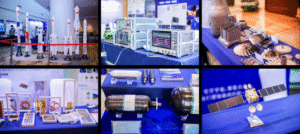
Exhibitions and forums work in tandem to focus on core areas and empower the industry. This event closely follows the pulse of the commercial aerospace industry, with both the exhibition and forum sections focusing on key industry topics, providing attendees with a comprehensive value chain experience. The exhibition area features five core specialized exhibition zones, including:
– Satellite Operations and Services Exhibition Zone
– Satellite Industry Support Equipment Exhibition Zone
– Satellite R&D and Manufacturing Exhibition Zone
– Commercial Rockets Exhibition Zone
– Core Components Matching and University Achievements Exhibition Zone
We will showcase cutting-edge technological achievements in areas such as satellite manufacturing, satellite structures, thermal control, propulsion systems, power supply and distribution subsystems, satellite payloads, communication satellite antenna subsystems, repeater subsystems, launch services and ground equipment manufacturing, rocket manufacturing, reusable rockets, commercial launch sites, launch services, ground equipment, ground stations, satellite communication access, satellite applications and services, power systems, measurement and operation control, as well as core materials and components. This will enable participants to closely monitor the advancements in commercial aerospace technology.
The summit forum sessions are designed to “identify trends and solve problems” and consist of a main forum and six specialized sub-forums, including:
– The Second Commercial Aerospace Industry Development Conference
– Satellite Internet and Low Earth Orbit Constellation Development Conference
– Commercial Rockets and Launch Services Technology Conference
– Deep Space Exploration and Space Information Industry Conference
– Remote Sensing and Communication Satellite Technology Conference
– Digital Space Development Conference
– Low-Cost Manufacturing and Reusable Technologies Conference
We will invite over 150 top experts and scholars to prepare reports for the main forum and sub-forums. The conferences will focus on core areas such as commercial aerospace policy background, aerospace economic development and security, the current state and prospects of aerospace transportation systems, satellite internet and low-orbit constellations, commercial rockets and launch services, deep space exploration and space information, remote sensing and communication satellites, digital space, and low-cost manufacturing and reusable technologies. In-depth discussions will be held on ways to overcome technical bottlenecks and market development opportunities, providing intellectual support for the industry’s growth.
Building bridges between supply and demand, various event scenarios will help promote industry collaboration. To address issues such as the long industrial chain and difficulties in cooperation in the commercial aerospace sector, this conference places emphasis on strengthening the connection between supply and demand. It includes sessions for enterprise promotion, demand announcement, intention signing, project presentations, and business negotiations, all designed to create efficient collaboration opportunities for companies. At that time, government departments, national aerospace agencies, aerospace research institutes, satellite operators, commercial rocket companies, and investment and financing institutions will gather to engage in